Reading a real call log: impressions, junk calls and the forty second rule
One client account shows 580,000 impressions and 30,400 clicks over twelve months. Here is what that looks like once you put Twilio on every line, including the calls that were never customers.
The short version
Impressions flatter, clicks inform, tracked calls pay. Not every tracked call is a lead, and any agency reporting raw call counts without listening to a sample is selling you wrong numbers. Call duration past about forty seconds is the most predictive column in the log.
What a real call log actually shows
Most SEO reporting is a rankings screenshot. I stopped sending those because a rankings screenshot cannot tell you whether the phone rang, and the phone ringing is the entire point.
Every site I build ships with Twilio call tracking from day one. That means every inbound call has a date, a duration, a source, and a recording. Here is what that data actually looks like once you have a few months of it, including the parts that are not flattering.
Impressions are not customers
One client account shows 580,000 impressions and 30,400 clicks over twelve months. That is a click-through rate of roughly 5 percent, which means 19 out of every 20 people who saw the listing did not click it.
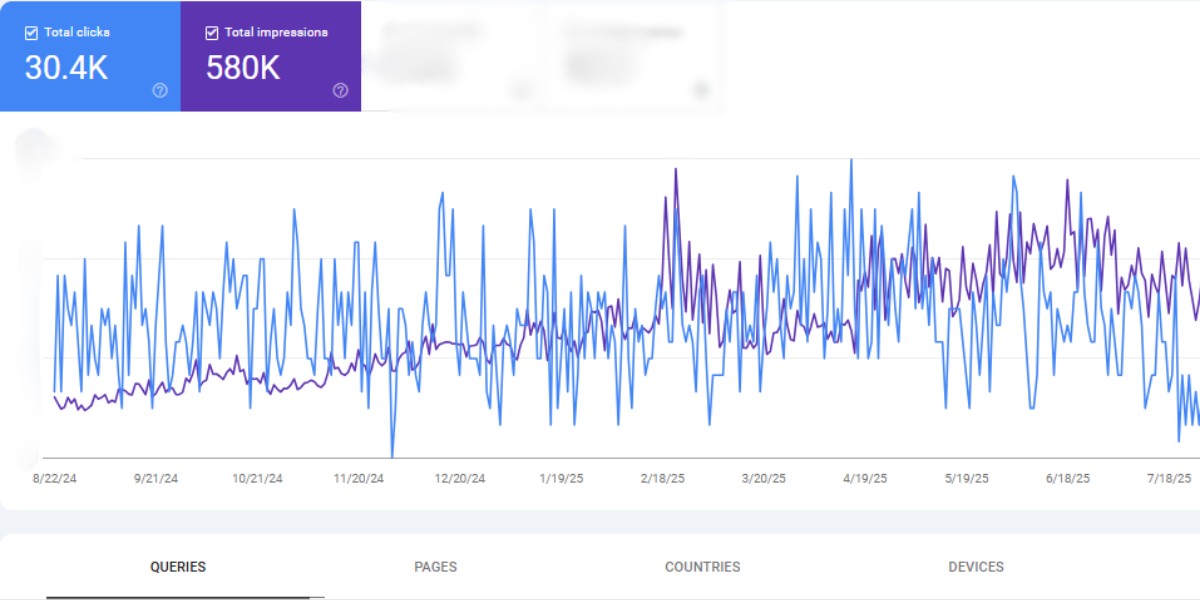
Twelve months of Search Console data from a client account. The blue line is clicks, the purple is impressions.
If you only ever look at the impressions number, that account looks enormous. If you look at clicks it looks healthy. If you look at tracked calls it looks like a business, which is the only view that pays anyone.
I bring the impressions number up with clients precisely because it is the one that flatters. An agency wanting to look busy will show you impressions growth every month and never mention that the ratio underneath it has not moved.
Not every tracked call is a good call
This is the part nobody publishes. When you put tracking on every line, you find out how much of your inbound volume is not a customer.
Wrong numbers. Suppliers. People asking whether you are hiring. Someone calling about a completely different service you do not offer. Robocalls that connect for four seconds. On a busy line these add up to a real fraction of the total, and if your agency is reporting raw call counts without listening to any of them, that fraction is being sold to you as leads.
The fix is not complicated. Listen to a sample every month. Tag the calls that were genuinely potential jobs. Report that number instead of the raw one. It is a smaller number and it is the true one, and any agency unwilling to show you the smaller number is telling you something.
Call duration is the most useful column
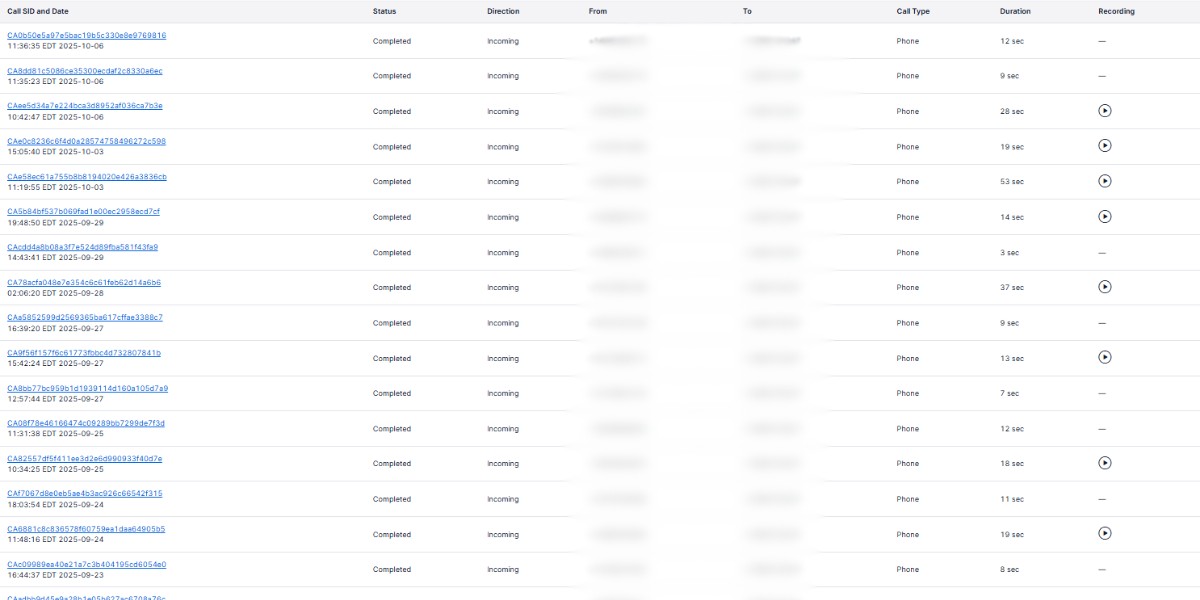
The single most predictive field in a call log is not the source or the keyword. It is duration.
A real tracked call log. Numbers redacted. The duration column is the one worth reading.
Twelve seconds is a wrong number or a hang-up. Nine seconds is a robocall. A call that runs past about forty seconds is a person describing a problem, and calls that run past forty seconds are the ones that turn into booked work at a rate nothing else in the log comes close to.
Once you know that, your monthly report becomes a much simpler question. How many conversations longer than forty seconds did the site produce, and is that number going up.
What this changes about the work
When you can see which searches produce long calls, you stop optimising for the keywords that look impressive and start doubling down on the ones that produce conversations. Sometimes those are lower volume terms that no keyword tool would have prioritised.
It also exposes the pickup problem. If a chunk of your tracked calls show as missed, ranking higher is not your bottleneck. I have had that conversation with clients more than once, and it is a better use of the retainer than another round of on-page work.
What to ask for
Ask your current provider for the call log itself, not the summary. Ask whether the recordings are available to you and whether you keep them if you leave. Ask what percentage of last month's reported calls they actually listened to.
If you want to see how the tracking is set up and what the reporting looks like, that is on the analytics and call tracking page. If you would rather just see whether your market is worth this in the first place, tell me your city and service.
Want this done on your own site?
Tell me your business and the area you serve and I will tell you whether the search is winnable, before you pay anything.
Get a free market check